
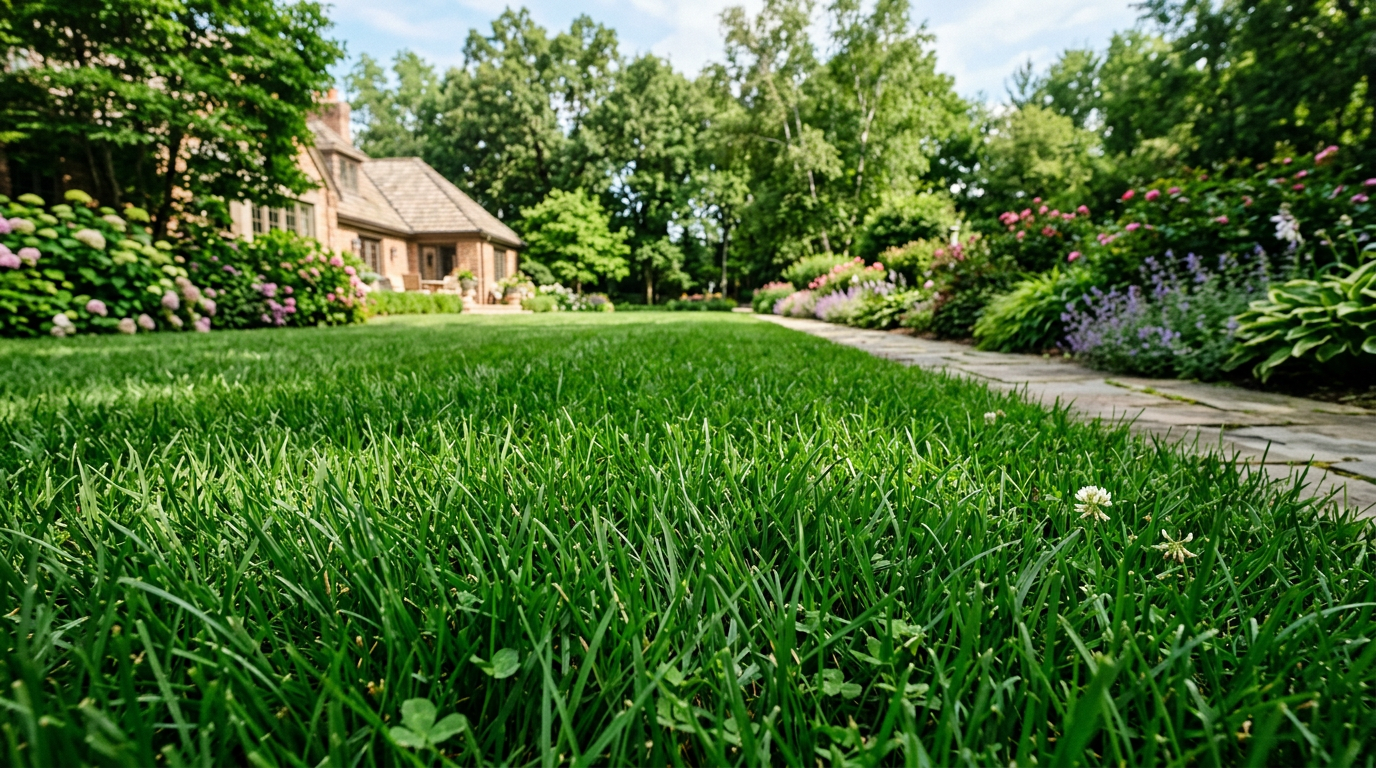
Late summer and early fall are critical periods for lawn maintenance in Pierre, South Dakota. Taking action before winter helps repair summer damage and promotes deep root growth. Core aeration and dethatching improve soil health, while overseeding thin areas with local seed blends ensures a denser lawn for spring.
Proper fertilization during this window focuses on strengthening root systems rather than immediate greening. Homeowners should also adjust watering schedules to support new growth while avoiding premature irrigation shutoffs. Avoiding common mistakes, such as waiting until the first freeze to address repairs, saves significant time and resources.
When it’s still hot out, it feels way too early to think about fall… but this is actually the best time to fix what summer did to your lawn. In Pierre, our winters don’t mess around, so what you do in late summer and early fall is what decides whether you get a thick, green lawn next spring or a patchy, crunchy one.
Even when the grass looks like it’s “done” for the season on top, the roots are still busy underground. Cooler nights and more consistent moisture make this the perfect window to repair damage, thicken your turf, and get roots deep before the ground freezes.
What you do in late summer and early fall is what decides whether you get a thick, green lawn next spring or a patchy, crunchy one.
Here are the big moves we recommend for Pierre lawns:
1. Open up the soil: aeration (and maybe dethatching)
All summer, your lawn has been stepped on, mowed, dried out, and baked. That compacts the soil and makes it hard for water and nutrients to get down where the roots live.
- If your yard is older, feels hard underfoot, or you’ve got lots of traffic (kids, dogs, mower tracks), fall aeration is a game changer.
- Core aeration pulls little plugs out of the soil so air, water, and fertilizer can actually get in.
- If you’ve got a thick, spongy layer of dead stuff sitting on top (thatch), a dethatching pass before overseeding can help new seed actually reach soil instead of getting stuck in the fluff.
We usually recommend doing this once the worst of the heat breaks but before we’re truly into cold nights, so your lawn has time to respond.
2. Overseed to thicken thin or bare areas
If you can see dirt when you look down at your lawn, that’s a sign you need more grass plants, not just more fertilizer.
- Fall is the best time to overseed in our area: cooler temps, less weed pressure, and warm soil to help seed germinate.
- Focus on a high-quality seed blend that’s suited for central South Dakota—something that can handle our temperature swings and wind. (This is where a “Pierre-tested” mix beats whatever was cheapest on a big-box shelf.)
- After you aerate, seed can fall right into those little holes and make great contact with soil.
The goal isn’t to start over from scratch—it’s to fill in the gaps so next spring your lawn is dense enough to crowd out weeds on its own.
3. Feed the roots, not the top: fall fertilizer
Fall fertilizer is less about “instant green” and more about building a strong root system.
- A good fall application helps your lawn repair summer stress and store up energy before winter.
- Depending on your yard and how it’s been treated this year, one well-timed fall feeding is usually enough.
- More is not better. Over-fertilizing can burn the grass and wash into storm drains when we get those random fall rains.
If you’re not sure what your particular lawn needs, this is where having someone look at it in person really helps.
4. Adjust your watering as temps drop
Once the brutal heat calms down, you can usually back off the heavy summer watering—but you don’t want to just shut it off too early.
- Newly seeded areas need consistent, light watering to keep the top layer of soil damp while seed germinates.
- Established lawns still need occasional deep drinks going into fall so roots stay active and keep growing.
- And please don’t blow out your sprinklers the first chilly day we get—wait until we’re truly headed into freeze territory, not just one cold night.
Think “steady support” instead of “summer survival mode.”
What NOT to do with your fall lawn
We see a lot of the same mistakes every year. Here are a few to skip:
- Waiting until after the first hard freeze to think about repairs
- Throwing seed on top of hard, compacted soil and hoping for the best
- Hammering the lawn with fertilizer and assuming that will fix bare spots
A little planning now saves you a lot of frustration (and money) next spring.
Want a fall plan for your yard?
Every yard in Pierre has its own history—construction damage, dogs, shade, irrigation quirks, you name it. If you want a simple, specific fall plan for your lawn before winter hits, reach out to us at Twin City Turf. We’re happy to take a look and tell you what actually makes sense for your yard instead of you guessing.